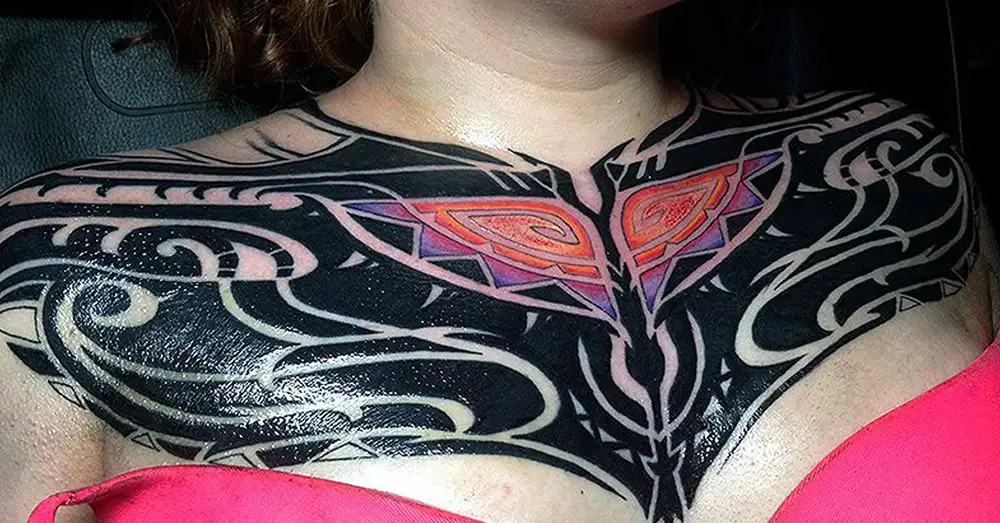
Intricate custom tribal chest tattoo by Dudes Tattoos in Bronx, NY, featuring black swirling patterns inspired by Polynesian art, a vibrant red-orange-purple gradient central motif like a butterfly, and precise linework for depth. A powerful cultural fusion piece demonstrating expert execution on New York City skin. Contact requests@dudestattoos.com for your custom tattoo.
Eternal Ink: The Enduring Legacy of Tribal Tattoos from Ancient Times to Today
Across millennia, tribal tattoos have etched profound stories onto human skin, serving as symbols of identity, spirituality, and cultural heritage. Far from mere decoration, these intricate designs originated in ancient rituals and have evolved into modern expressions of personal narrative and rebellion. The practice predates written history, with the earliest evidence tracing back over 5,000 years to Ötzi the Iceman, discovered in the Alps in 1991. Dating to around 3300 BCE, Ötzi's body bore 61 simple lines and crosses, likely therapeutic marks for pain relief or acupuncture-like treatments, marking humanity's first known tattoos.
In ancient Egypt (circa 2000 BCE), tattoos adorned female mummies with symbolic patterns—dots, nets, and sacred animals—believed to invoke fertility, protection, and divine favor. Across the Nile in Nubia, women wore blue tattoos as talismans against evil. Meanwhile, in Polynesia, the art of tatau (from which "tattoo" derives) flourished among Maori, Samoan, and Hawaiian peoples. Using bone combs dipped in ink and tapped into skin with mallets, these designs—swirling motifs of sharks, waves, and ancestors—signified genealogy, social rank, achievements, and spiritual connections. For warriors, they offered protection in battle; for women, markers of maturity and beauty.
Native American tribes, from Inuit to Apache, inked totems and symbols for tribal affiliation, spiritual guidance, and rites of passage. In the Arctic, women received chin tattoos (yidid) to signify marriage eligibility and ward off spirits. African cultures blended scarification with ink; Berber women in North Africa bore facial marks for beauty and protection, while West African tribes used them for healing scars or denoting bravery. In Japan, Ainu people tattooed mouths and arms as spiritual barriers against demons. These practices weren't frivolous—reasons included asserting identity in communal societies, honoring ancestors, marking life milestones like puberty or marriage, providing magical protection, and signifying status or achievements.
The word "tattoo" entered English via Captain James Cook's 1769 voyages to Tahiti, where he observed "tattowing." Colonialism suppressed many traditions—missionaries banned Polynesian tattoos as pagan—but they persisted underground. In the 20th century, tribal styles revived amid cultural reclamation movements. Sailors and soldiers popularized them post-WWII, but the 1990s "tribal" boom, inspired by Polynesian motifs, turned them mainstream—bold black lines and geometric patterns adorning arms and backs as symbols of strength and exotic allure.
Today, tribal tattoos blend ancient reverence with contemporary meaning. Revived by indigenous artists like those in Maori ta moko workshops, they combat cultural erasure while educating wearers. Modern reasons extend beyond tradition: self-expression in a globalized world, rebellion against conformity, commemorating personal journeys, or aesthetic appeal in fusion styles like neo-tribal (mixing cyber elements) or blackwork. Yet cultural appropriation concerns arise—non-indigenous people adopting sacred symbols without understanding risks dilution. Ethical tattooing emphasizes respect: consulting cultural experts or choosing inspired designs over direct copies.
From Ötzi's therapeutic marks to today's intricate sleeves, tribal tattoos endure as living history—bridges between past rituals and present identities, reminding us that ink tells stories deeper than skin