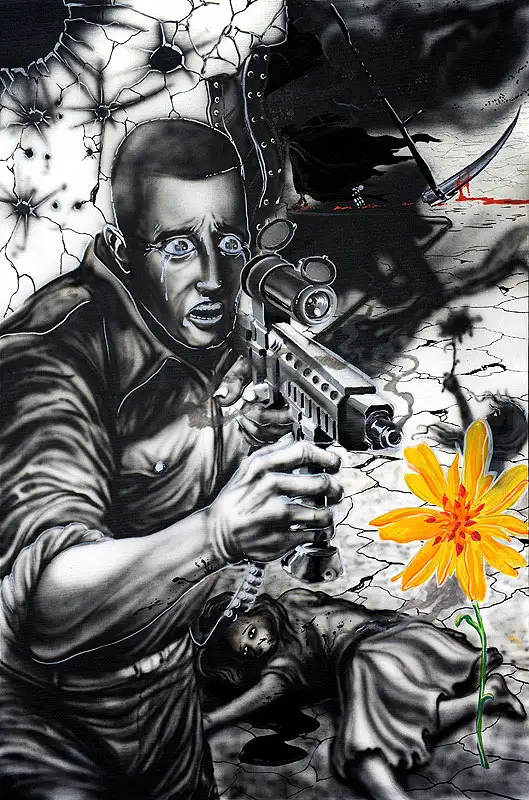
Powerful anti-war tattoo artwork by Dudes Tattoos in Bronx, NY, illustrating a tearful soldier pointing a gun at a vibrant yellow flower Hovering Above the cracked earth and a dead child, the spirit of that same girl offering the flower to the soldier who just gunned her down, with a blood-dripping grim reaper moving in the shadows. Trusted for those seeking meaningful, symbolic body art in New York City. Contact requests@dudestattoos.com for consultations.
Invisible Scars: PTSD in American Veterans and Lifelong Healing
For generations, American soldiers have returned from battlefields bearing wounds unseen by the naked eye—post-traumatic stress disorder (PTSD), a haunting echo of combat's chaos. Recognized formally in 1980 by the DSM-III, PTSD's roots trace back to "shell shock" in World War I, "combat fatigue" in WWII, and the Vietnam era's widespread psychological fallout. Today, among U.S. veterans, lifetime PTSD prevalence hovers around 7-8%, with rates soaring to 15-29% for those from Operations Iraqi Freedom and Enduring Freedom. Read more on PTSD statistics. Women veterans face even higher risks, at 13-24%, often compounded by military sexual trauma. These invisible scars manifest as flashbacks, hypervigilance, isolation, and despair, disrupting lives long after service ends. Yet hope endures through innovative, lifelong approaches: art therapy for expression, pet companionship for comfort, and evidence-based therapies for rewiring the mind.
Art therapy emerges as a powerful bridge between trauma and recovery, drawing from ancient cultural practices where creation heals the spirit. For veterans, it offers a non-verbal outlet to externalize horrors words can't capture. Programs like those at the VA's National Veterans Creative Arts Festival or Path with Art allow soldiers to paint, sculpt, or draw their experiences, reducing isolation and rebuilding identity. A 2016 randomized trial showed art therapy combined with Cognitive Processing Therapy significantly lowered PTSD and depression symptoms in combat veterans, fostering emotional access and healthy distancing from memories. Read the study. Over a lifetime, regular art practice sustains progress—veterans report sustained reductions in anxiety, with group sessions building community bonds that combat loneliness.
Equally transformative is pet therapy, particularly service dogs trained to interrupt nightmares, create space in crowds, or ground during panic attacks. Indigenous cultures long viewed animals as spiritual guides; today, organizations like K9s For Warriors pair rescued dogs with veterans, saving two lives at once. Studies confirm: a 2018 scoping review found service dogs markedly decrease PTSD symptoms, improving sleep and social functioning. Read the review. For one Vietnam vet, his dog became a "battle buddy" easing hyper-vigilance over decades. Lifelong companionship evolves with needs—dogs provide routine, purpose, and unconditional love, reducing suicide risk by fostering connection in an often isolating world.
Core to recovery is professional therapy, evolving from short-term interventions to lifelong management. Cognitive Behavioral Therapy (CBT) reframes negative thoughts, while Eye Movement Desensitization and Reprocessing (EMDR) processes trauma through guided eye movements, showing sustained effects in veterans years post-treatment. A 2018 study compared intensive daily EMDR to weekly sessions, both yielding lasting remission at one-year follow-up. Read the study. Over a lifetime, therapies adapt: early CBT for acute symptoms, ongoing EMDR for resurfacing triggers, integrated with mindfulness for aging vets. Combined with art and pets, this holistic approach rebuilds resilience, turning survival into thriving.
PTSD's grip may loosen but never fully release—yet through art's expression, pets' loyalty, and therapy's science, veterans reclaim their stories. As one Gulf War survivor shared, "Healing isn't forgetting; it's carrying the weight lighter." For those struggling,