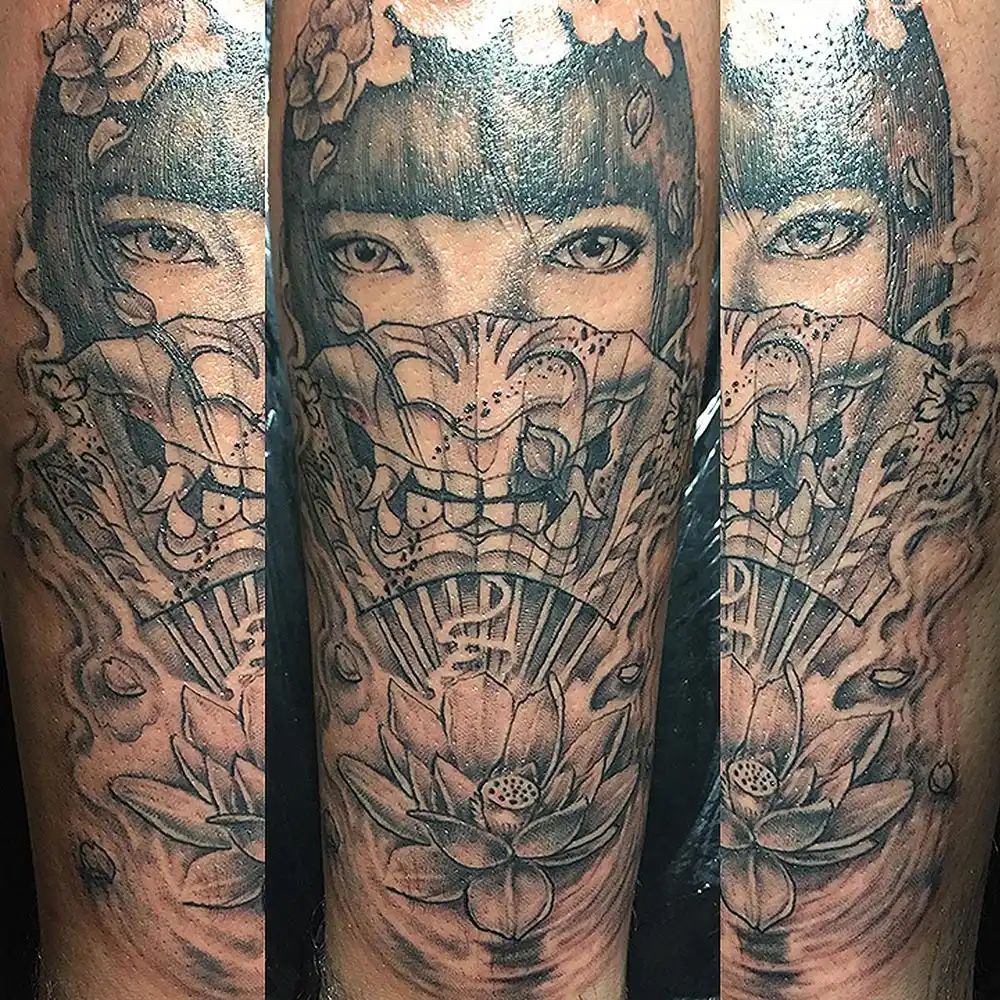
Forearm Tattoo | Black and grey | Illustrative | Neo-Japanese tattoo
An E​xquisite custom color hand tattoo by Dudes Tattoos in Bronx, NY, portraying a serene geisha with elaborate bun, pink and orange flowers, realistic shading, and cultural details. A bold Japanese-inspired piece showcasing precision on challenging hand skin in New York City. Contact requests@dudestattoos.com for your custom tattoo.
A Kitsunetsuki Tale
The lantern-lit hanamachi of Kyoto during the waning years of the Edo period, around 1850, a talented young geisha named Sayuri served in one of Gion's respected okiya. Trained from childhood in dance, shamisen, and the art of graceful conversation, she enchanted patrons with her delicate features and melancholic songs. Yet beneath her painted smile lay quiet sorrow—debts binding her family, the loss of her mother to illness, and the constant demand to please powerful men without ever truly belonging to herself.
One autumn evening, after a grueling banquet where a drunken samurai had humiliated her publicly, Sayuri returned to the okiya exhausted and tearful. That night, strange events began. She woke screaming, her body convulsing as if gripped by invisible hands. Her voice shifted to a guttural growl, demanding fried tofu and rice wine in a tone not her own. The next day, she spoke fluently in an old dialect no one recognized, recounting grudges against a long-dead merchant who had wronged a fox shrine centuries before. Her eyes narrowed to slits, pupils flickering like candle flames, and she snapped at attendants with sudden ferocity, mimicking a fox's cunning bark.
The okiya's okasan, fearing scandal, summoned a respected monk from a nearby temple. Word spread quietly among geisha circles—such afflictions were not unheard of. Kitsunetsuki (fox possession), had plagued women for generations, especially those beautiful and vulnerable, drawing the mischievous or vengeful spirits of Inari's messengers. Historical records from the time note similar cases: young women in pleasure districts trembling uncontrollably, claiming to be ancient foxes seeking retribution, their bodies marked with unexplained scratches or welts.
The exorcism lasted days. The monk chanted sutras, burned incense thick with cedar, and placed ofuda talismans on Sayuri's forehead and chest. She thrashed, cursing in the fox's voice, revealing secrets of patrons that chilled the room. At one point, she lunged, biting her own arm until blood flowed, as if the spirit fought to stay. Witnesses reported a foul wind sweeping through the tatami room, extinguishing lamps. Finally, under relentless prayer, the spirit spoke its name—a vengeful kitsune wronged in a forgotten era—and promised to depart if offerings were made at a local Inari shrine.
Sayuri collapsed, sweat-soaked and trembling. When she awoke, the fox was gone. She remembered fragments: dreams of running through rice fields on four paws, tasting freedom denied in human form. The geisha recovered slowly, her reputation shielded by the okiya's discretion. She continued performing, but with a newfound caution around shrines and a quiet habit of leaving inari-zushi offerings.
Such stories, echoed in Meiji-era medical journals and folk collections like those of folklorist Takatoshi Ishizuka, illustrate how supernatural belief intertwined with real lives. Possession offered explanation for mental anguish in a rigid society—grief, pressure, or trauma manifesting as demonic influence. Sayuri's tale, like many, faded into whispered legend, a reminder that even in the elegant world of the geisha, unseen forces could claim the soul.
One of the most intriguing historical tales blending geisha life with supernatural possession in Japanese folklore involves kitsunetsuki (fox possession), a phenomenon documented from the Edo period (1603–1868) through the Meiji era (1868–1912). While not tied to a single named geisha like Tojin Okichi, real accounts from medical, folklorist, and eyewitness reports describe young women—often entertainers, shrine maidens, or those in artistic professions like geisha—afflicted by fox spirits (kitsune). These possessions were treated as genuine spiritual illnesses, with exorcisms performed by Buddhist monks, Shinto priests, or onmyoji (esoteric practitioners). Anthropologists like Erwin von Baelz (a German doctor in Meiji Japan) and later folklorists recorded such cases in rural and urban areas, including Kyoto and Tokyo districts where geisha thrived.
Fox spirits, associated with Inari shrines, were believed to possess people for revenge, mischief, or to feed on life force. Victims exhibited fox-like behaviors: craving tofu or sweet foods (kitsune favorites), barking, growling, speaking in altered voices, sudden personality changes, or physical marks resembling bites. Possession often struck women under emotional stress, fitting the pressured lives of geisha amid rigid social expectations.