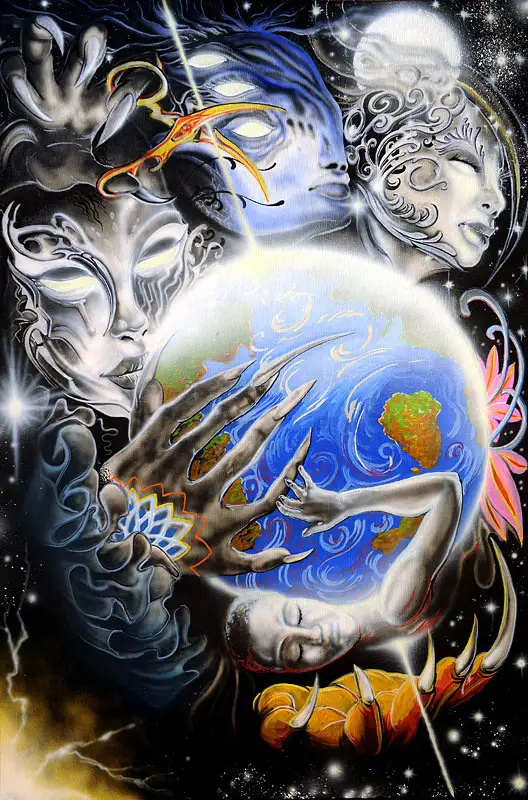
Intricate cosmic tattoo artwork by Dudes Tattoos in Bronx, NY, depicting masked ethereal faces, a clawed hand clutching planet Earth, a serene Buddha embracing it, with moonlit stars and ornate mystical elements. Great for custom spiritual or surreal body art in New York City. Contact requests@dudestattoos.com for inquiries.
Threads of Destiny: The Sisters of Fate & Their Timeless Grip on Mortality
In the shadowed looms of ancient Greek mythology, the Sisters of Fate—known as the Moirai—wove the inescapable tapestry of human existence. These three enigmatic goddesses, Clotho, Lachesis, and Atropos, embodied the inexorable power of destiny, determining the length, quality, and end of every mortal life. Born from primordial chaos or, in some tales, daughters of Nyx (Night) or Zeus and Themis (Justice), their origins trace back to the earliest Greek cosmogonies around the 8th century BCE. Hesiod's Theogony first names them as divine spinners, underscoring fate's primacy even over the Olympian gods. This concept of an unyielding destiny reflected the Greeks' worldview: humans as pawns in a cosmic order, where free will clashed with predetermination.
Clotho, the youngest, spun the thread of life from her distaff, symbolizing birth and beginnings. Lachesis, the allotter, measured its length with her rod, deciding the span and fortunes woven into it. Atropos, the eldest and most inexorable, cut the thread with her shears, marking death's finality. Together, they resided in a misty realm beyond Olympus, their decisions binding all—from peasants to kings, mortals to immortals. Even Zeus, king of gods, hesitated to defy them, as seen in Homer's Iliad where he weighs fates on golden scales but bows to their decree during the Trojan War.
One enduring story illustrates their power: the birth of Meleager. At his naming ceremony, the Moirai appeared uninvited, prophesying he would live only until a log in the hearth burned away. His mother, Althaea, snatched and hid the log, granting him strength and heroism. Yet when Meleager slew his uncles in rage, Althaea burned the log in vengeance, fulfilling the Fates' word as he perished. This tale, echoed in Ovid's Metamorphoses, highlights fate's inevitability and the futility of resistance—themes central to Greek tragedy.
Another pivotal myth involves Admetus, king of Pherae, whose life thread was short. Apollo, owing Admetus a favor, persuaded the Moirai to extend it if someone died in his place. His wife, Alcestis, volunteered, but Heracles wrestled Death to restore her. Here, the Fates show rare flexibility, yet only through divine intervention, reinforcing their supreme authority. Such stories influenced Roman adaptations, where the Moirai became the Parcae—Nona, Decima, and Morta—integrating into Latin literature like Virgil's Aeneid, where they dictate Aeneas's heroic destiny amid Rome's founding myth.
The concept of fate, or moira, originated in Indo-European roots, evolving from apportionment (sharing lots) to cosmic inevitability. Archaeological evidence, like 6th-century BCE vases depicting the Moirai at births or battles, shows their worship in cults at Sicyon and Sparta. Philosophers like Plato in The Republic debated their role, portraying them as singers harmonizing the universe's spheres, blending fate with justice and necessity.
Their legacy endures in modern culture—from Shakespeare's witches in Macbeth echoing their prophetic weavings to films like The Matrix, where choice battles predestination. Scientifically, while fate is metaphorical, psychological studies on locus of control explore perceived destiny's impact on mental health. The Sisters remind us: life's threads are fragile, yet in acknowledging them, we find meaning in the weave.